Jamiyat
Training on strengthening public participation in anti-corruption held in Namangan
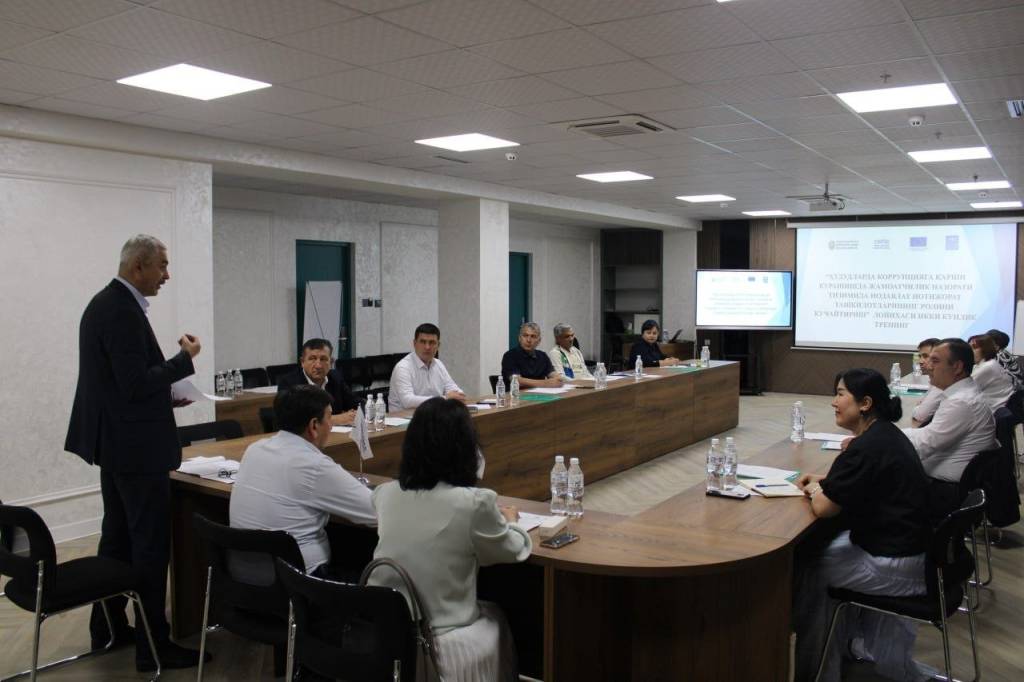
A two-day practical training dedicated to strengthening the role of public control in combating corruption in the regions with the participation of representatives of non-governmental non-profit organizations was held in Namangan. This event was organized by the National Association of Non-Governmental Non-Profit Organizations of Uzbekistan within the framework of the small grants program of a project funded by the European Union, in cooperation with the Anti-Corruption Agency and the UN Development Programme.
During the training, participants were provided with detailed information about the work being carried out in our country to combat corruption and ensure openness and transparency of state bodies. It was emphasized that expanding the participation of civil society institutions and increasing the capacity of NGOs locally in identifying and preventing corruption is of particular importance. Chairman of the Council of the National Association of NGOs of Uzbekistan Kamoliddin Eshonkhodjaev, Head of the Department of the Namangan Regional Justice Administration Zulfiya Akhmadkhodjaeva, and UNDP Uzbekistan staff member Fotima Turghunbaeva expressed their views on this matter.
During the practical sessions, participants got acquainted with the legal basis of public control, forms and mechanisms of its implementation. Skills in organizing public hearings and monitoring, timely identification of corruption risks, and ensuring public participation in the activities of state bodies were also taught. Ikromjon Karimov, the head of the Namangan regional branch of the National Association of NGOs of Uzbekistan, specifically noted that NGOs serve as a bridge between the people and the state.
The second part of the seminar was held in the spirit of lively discussions and Q&A. The participants, divided into small groups, completed practical tasks and reviewed real cases on assessing corruption risks. Ways to properly organize public hearings and monitoring in practice were also discussed. At the end of the event, it was noted that the acquired knowledge will become an important foundation for implementing future projects and initiatives at the regional level.
Ulashish